1963
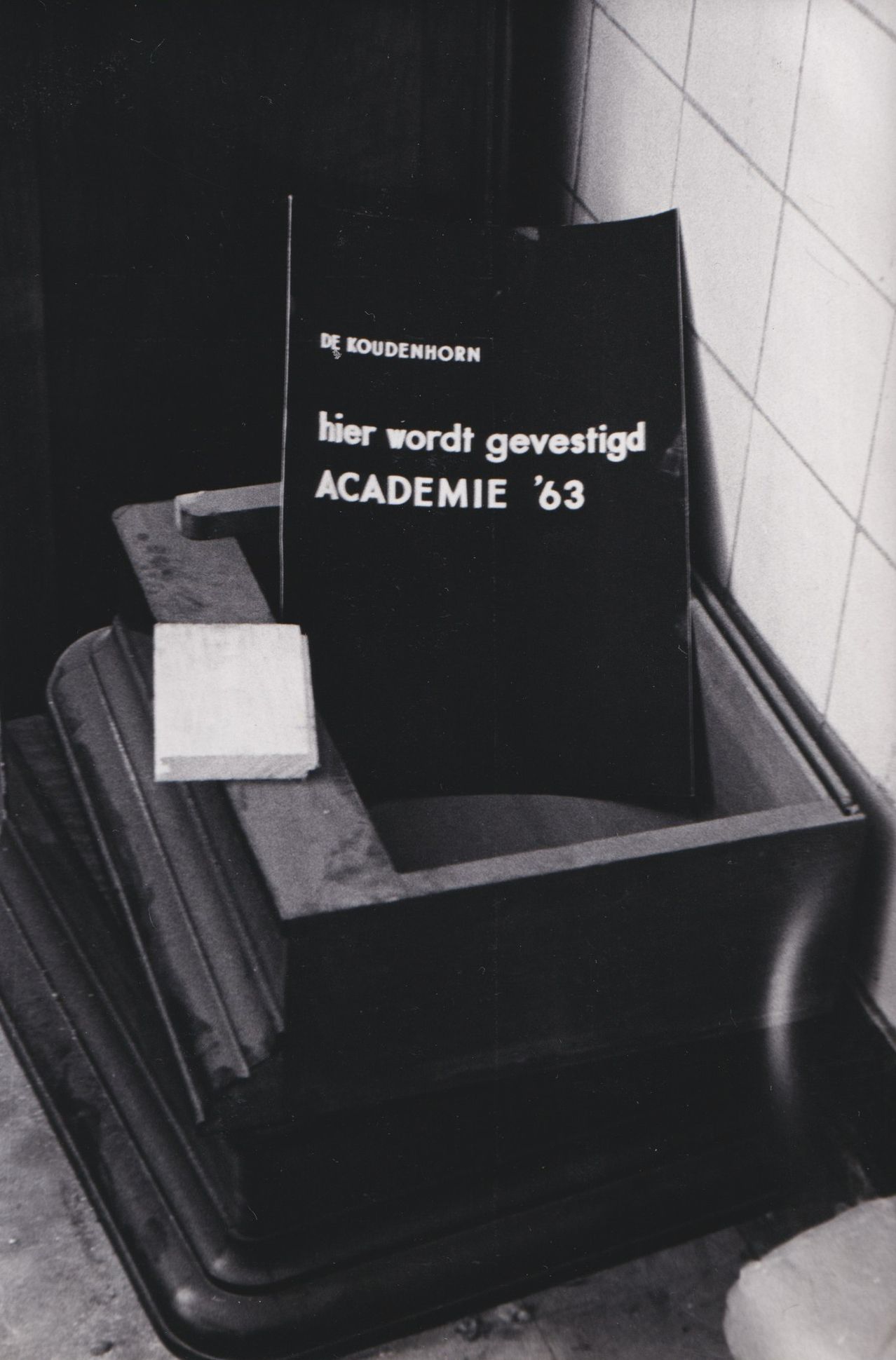
Increasing numbers of young artists began approaching the studios of Haarlem sculptors Mari Andriesse and Theo Mulder, asking whether they could become their apprentices. Half-jokingly, Andriesse suggested: “Couldn’t we start a little school?” What followed was a first attempt to offer an alternative to the regular academic art education of the time, based on direct contact between emerging artists and experienced colleagues. Initially, this ‘workshop-based education’ was offered at the Koudenhorn barracks in Haarlem, in spaces run by experienced artists—a modern version of the traditional master-apprentice model. Students chose an artist to apprentice with and then worked independently in that artist’s studio. By then, the group of ‘teachers’ had been joined by several other professional sculptors and painters.
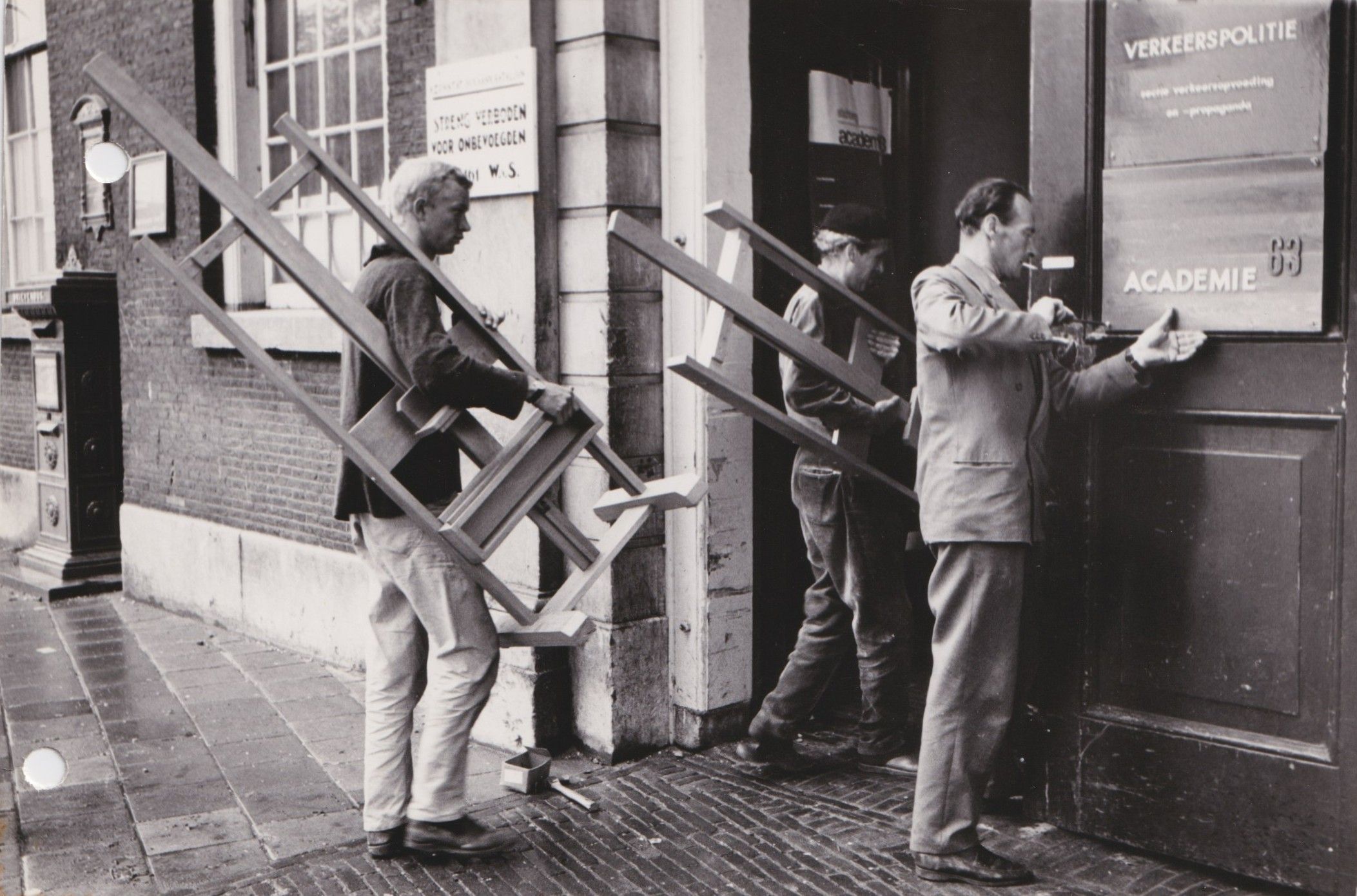
Artists from Academie '63 entering the Koudenhorn barracks, Haarlem, June 14, 1963. Photo: Harry Pot
1968
Under the leadership of sculptor Wessel Couzijn, the workshop-based education system was radically reorganised: it was no longer the tutors, but the emerging artists themselves who had their own studios. A more fitting name was therefore ateliers ’63, deliberately written without capital letters. By this time, only two of the seven original initiators remained. Under Couzijn, they were joined by a new group of artists who were open to radically new forms of art education. Among them were painters Edgar Fernhout, Reinier Lucassen and Ger Lataster; sculptors Carel Visser and Jan van Munster; and visual artists Jan Dibbets and Ger van Elk. With them, the first contours emerged of what still characterises De Ateliers today: Tuesday studio visits, an open yet rigorous selection process, and above all, a belief in the development of artistic practice through conversations with experienced colleagues. The fact that the individual tutors’ approaches to conversations and studio visits differed greatly from one another, particularly in the early years, was precisely what gave the institute its strength.
1971
The barracks that had housed ateliers ’63 up to that point were cleared by the municipality of Haarlem to make way for the city’s police headquarters. Fortunately, the then-director Paul Schotel found alternative accommodation in the former Sint Jozef monastery on the Zijlsingel in Haarlem, where the institute would remain until 1992. To some, it was an appropriate location: De Ateliers has more than once been described as a kind of monastery for artists, a place where they can withdraw and concentrate on their practice.
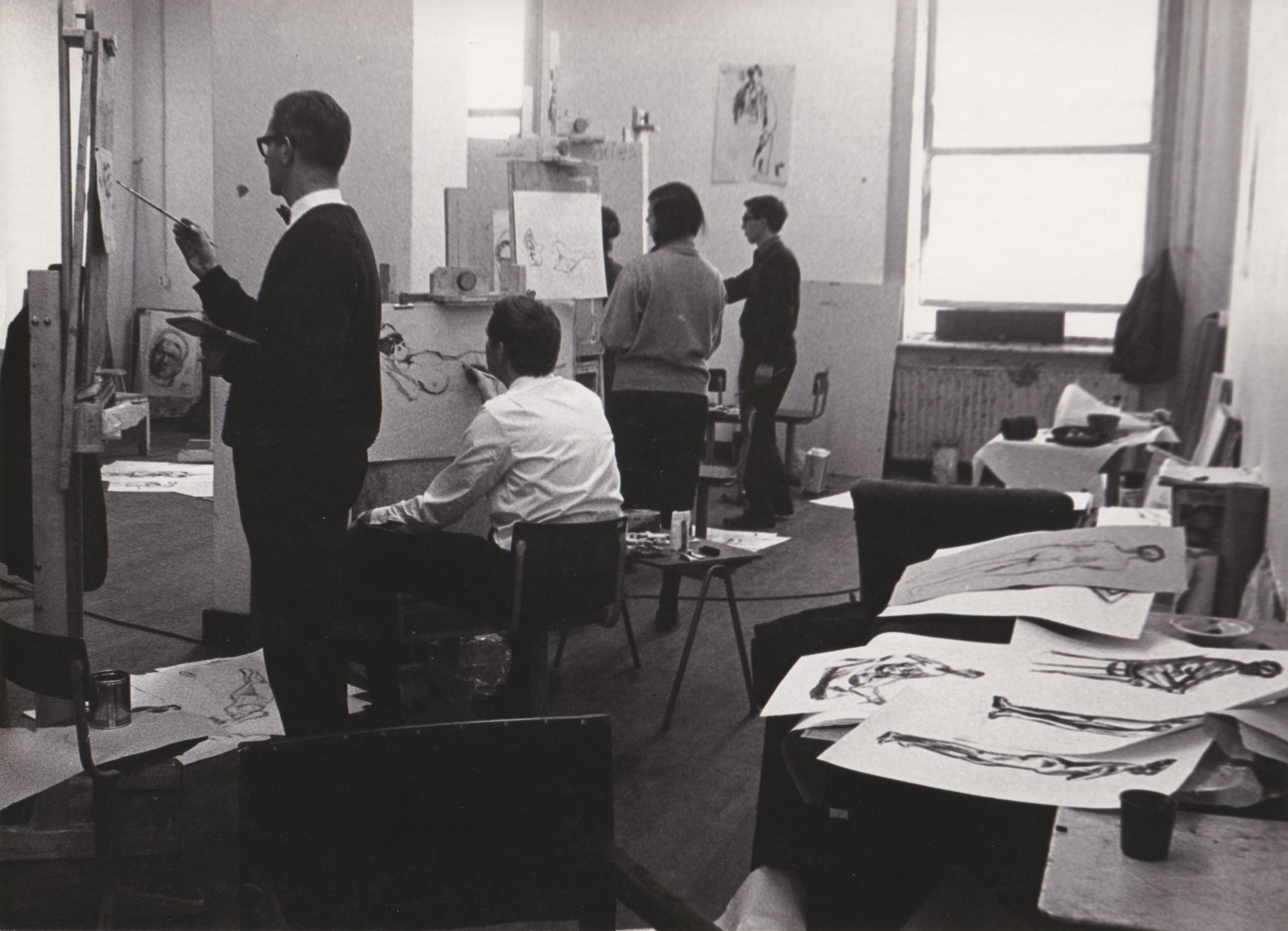
Model drawing at academie '63, 1963. Photo: Uipko Berghuis
1975
In response to the frequent accusation that De Ateliers was a closed bastion, a group exhibition showcasing former participants was organized. The first edition, curated by Jan Dibbets, Carel Visser, and Marcel Vos, in collaboration with Jan Zumbrink, was held in the Vleeshal on the Grote Markt in Haarlem. From then on, exhibitions like this would take place roughly once every five years, including at the Fodor Museum in Amsterdam, the Bonnefanten Museum in Maastricht, and the Palace of Fine Arts in Brussels. The last group show of this series was organized in 2002.
1984
Marcel Vos became director, a position he held until 1995. By then, De Ateliers had become well established within the Dutch art education landscape and began to influence other so-called post-academic institutions. While participants at De Ateliers had already been working with happenings, performance and video art for years, students at the Rijksakademie were still studying anatomical drawing. Between 1984 and 1986, the Rijksakademie’s management undertook a series of structural reforms, with De Ateliers serving as an unexpected point of reference. From then on, young artists at the Rijksakademie were given their own studios for two years and visited by ‘advisers’, rather than receiving classroom-based instruction from professors, as had previously been customary in post-academic education.
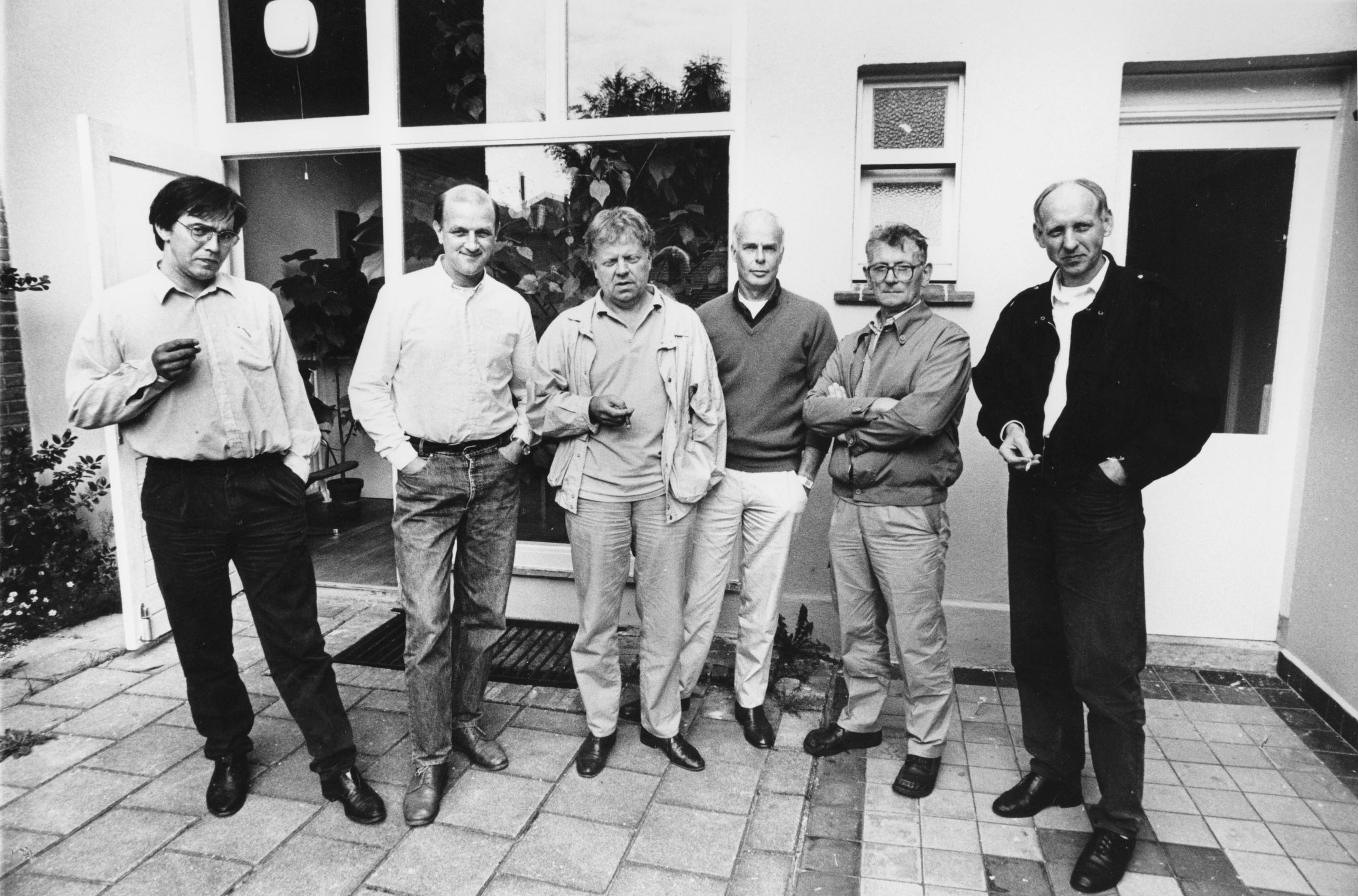
Tutor team in 1986, from left to right René Daniëls, Toon Verhoef, Jan Dibbets, Jan Beutener, Ben Akkerman, Marcel Vos (not pictured: Carel Visser, stanley brouwn). Photo: Pieter Boersma
1992
After the Rijksakademie announced its move to the current location on Sarphatistraat in the late 1980s, the idea arose to take over the building they had left behind. This process would turn out to be full of challenges, but in 1992, the time had finally come: De Ateliers made its move to Amsterdam. The new building was a dream come true: large spaces, high north-facing windows, and an enormous building specially designed for art education. The fact that the monument was in poor condition did not dampen the spirits. The participants enthusiastically helped with the plastering and painting, and artist Sol LeWitt, sympathetic to the cause, designed a tiled floor for the participants' common areas.
1993
In the summer of ‘93, a roundtable discussion or so-called expert meeting was held in the new building, led by Rudi Fuchs. Participating artists were John Baldessari, Chris Dercon, Jan Dibbets, Tony Cragg, Pierre-Jean Galdin, Georg Herold, Fritz Heubach, Toon Verhoef, and Alister Warman. It was a lively debate revolving around questions such as: how should art education relate to contemporary art? What can one teach a student and what cannot be taught? What is the relationship between theory and practice? One of the few moments of mutual agreement is when Baldessari remarks, “I’ve always had the suspicion that when I think I’m teaching I’m not, and when I think I’m not teaching I am.”
2006
The previously informal, week-long solo presentations by graduating second-year students are merged into a single exhibition for the first time: Offspring. In this final exhibition, which still takes place annually, the project features an ever-changing lineup of guest curator and designer.
2026
Ateliers ‘63 turns 63! This is being celebrated with a brand-new website full of archival material, photos, and information.
If you want to read more about the history of De Ateliers, you might like De Ateliers 1963 – 2023. History of an artists’ institute, a book written by art critic and our former director Dominic van den Boogerd.
graphic archive
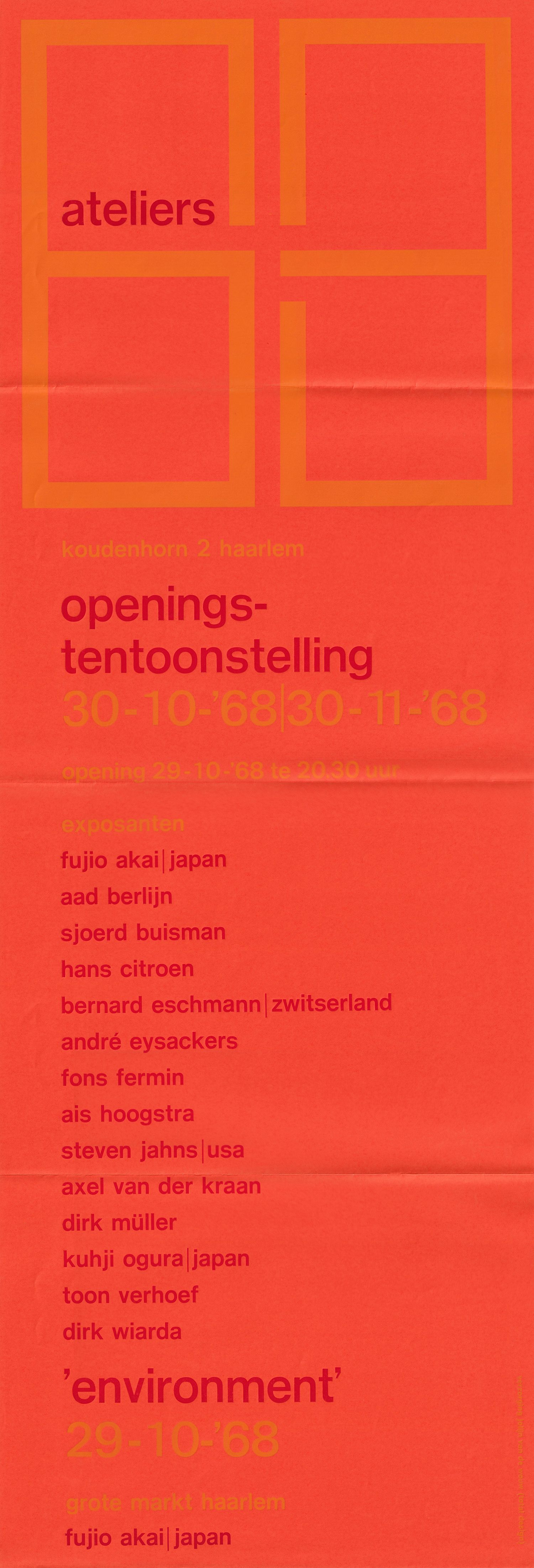
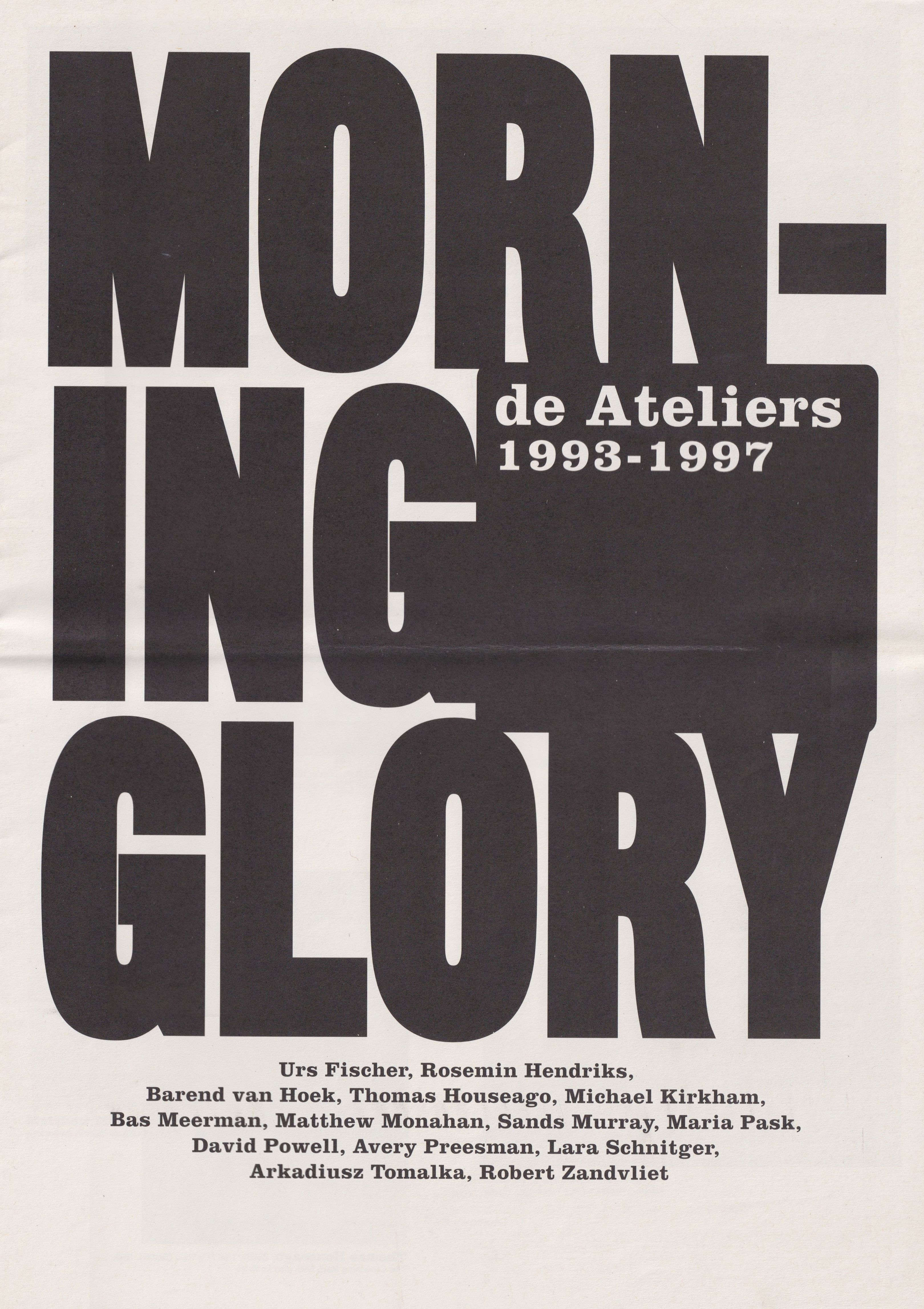
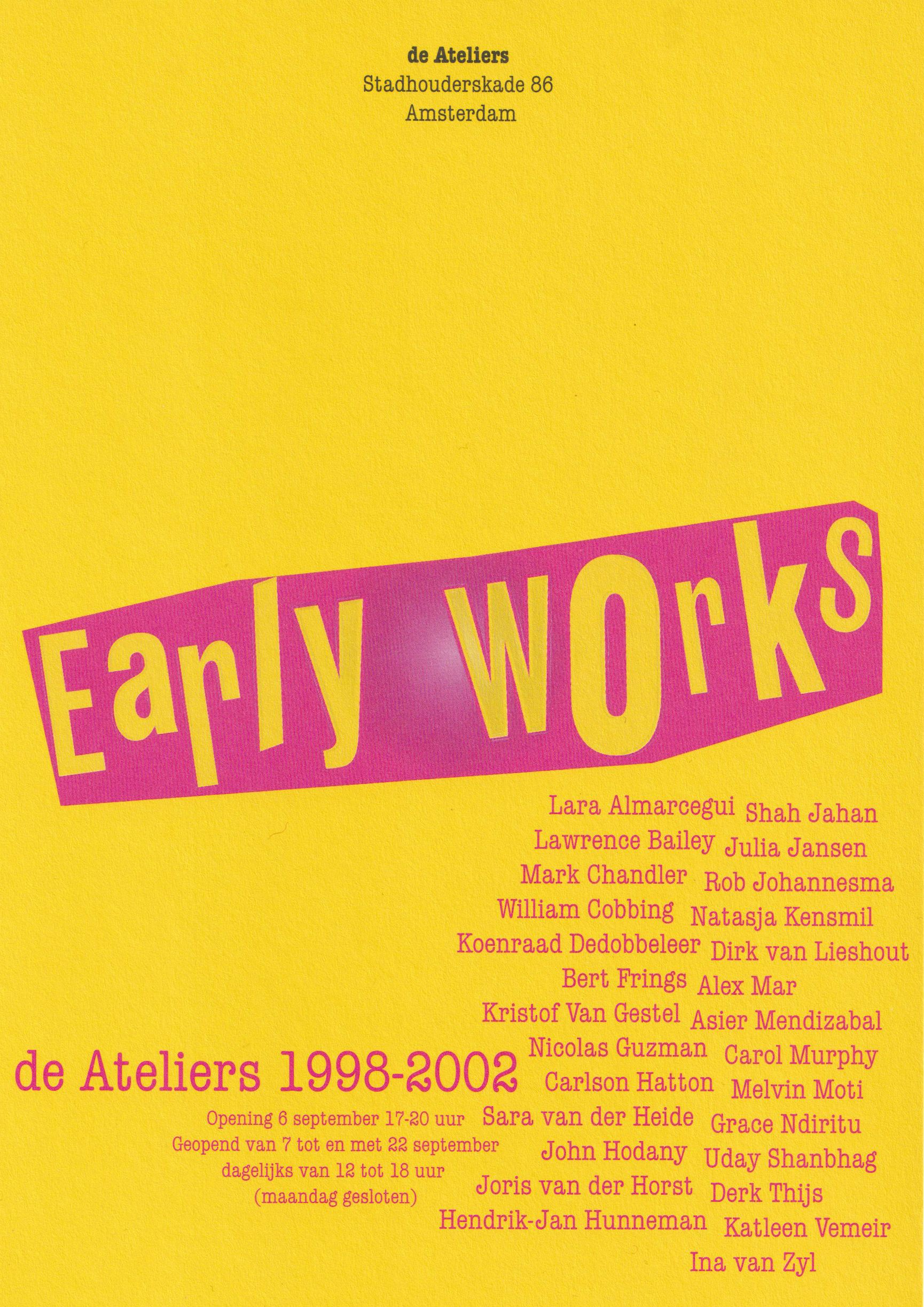
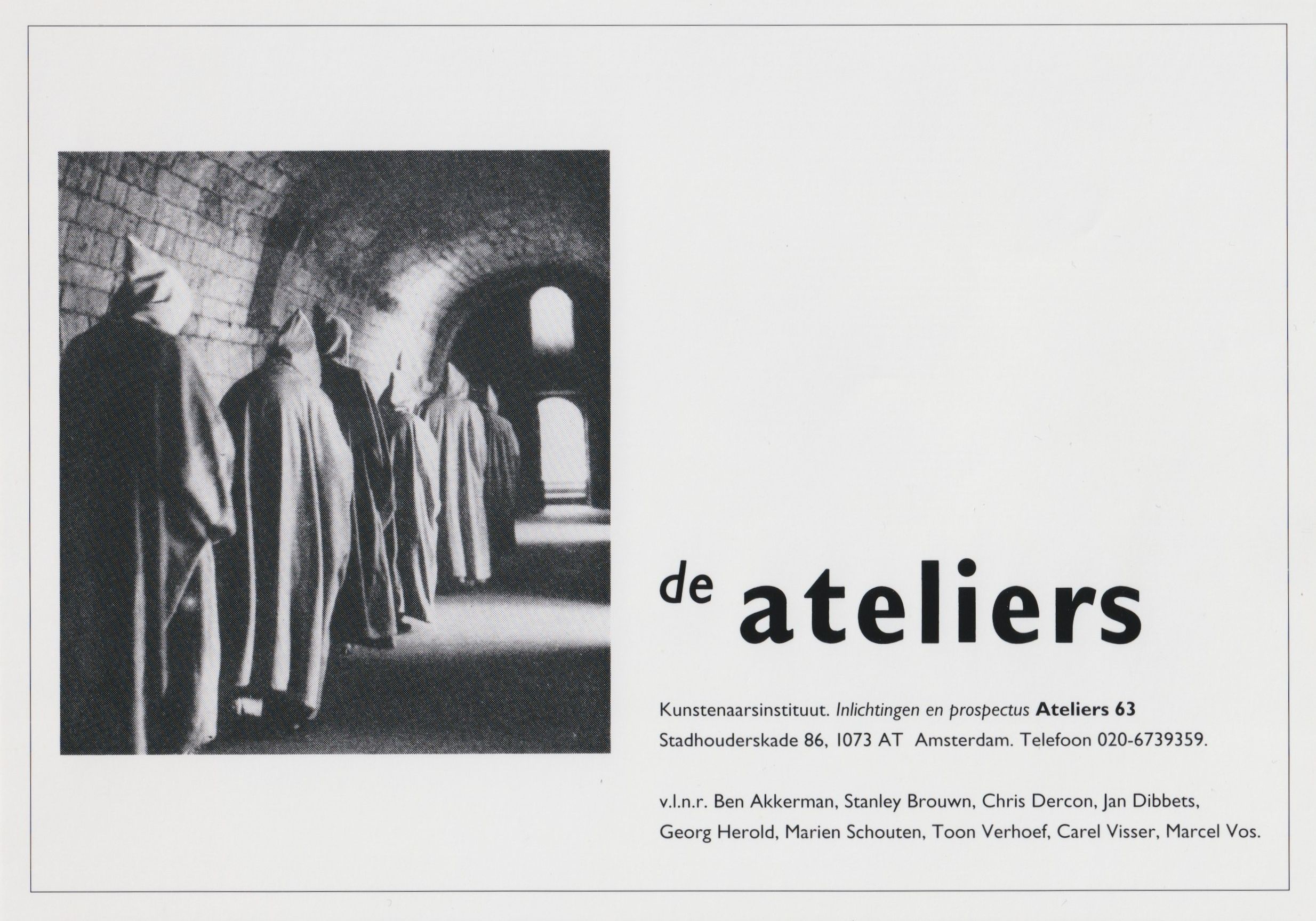
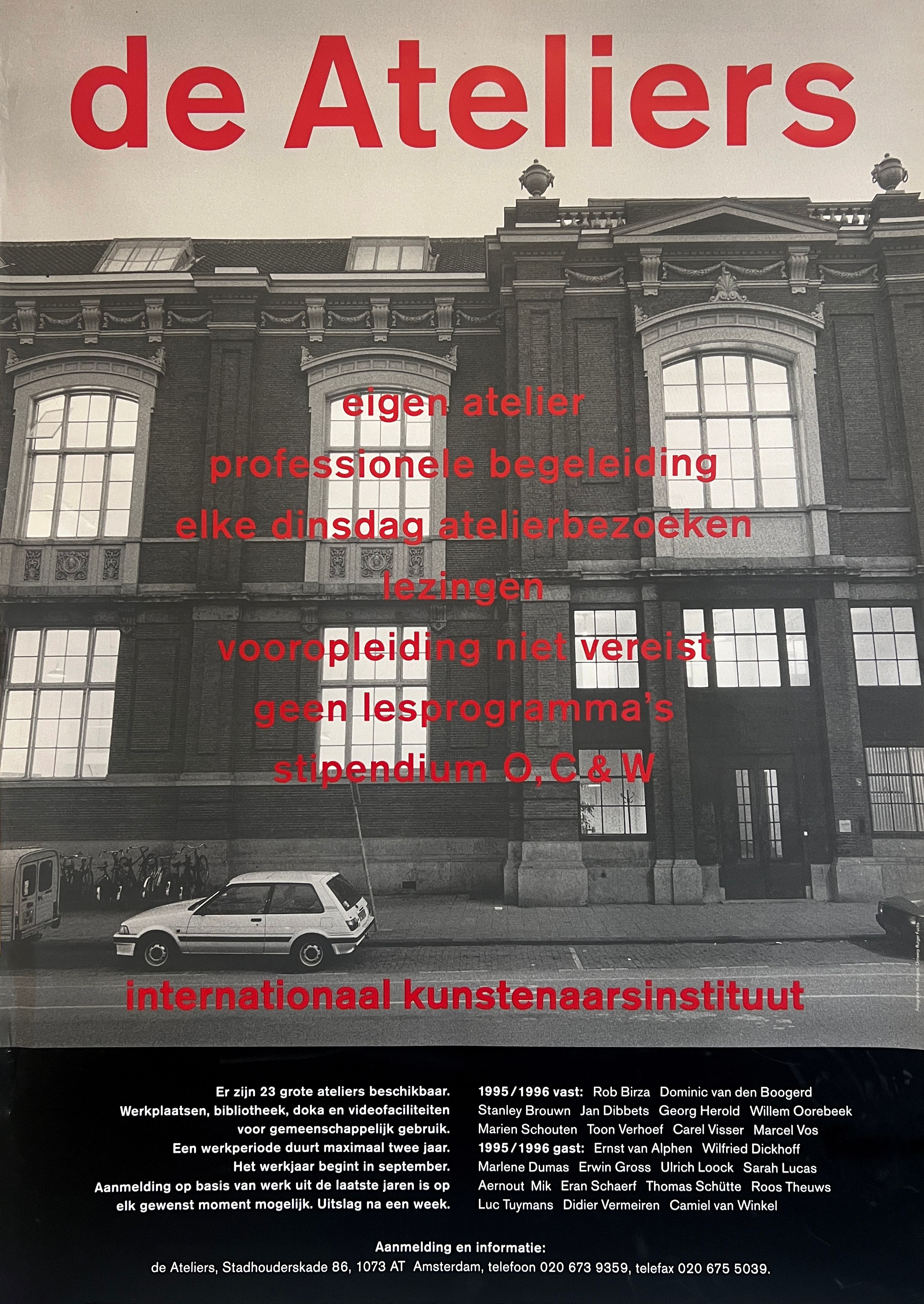
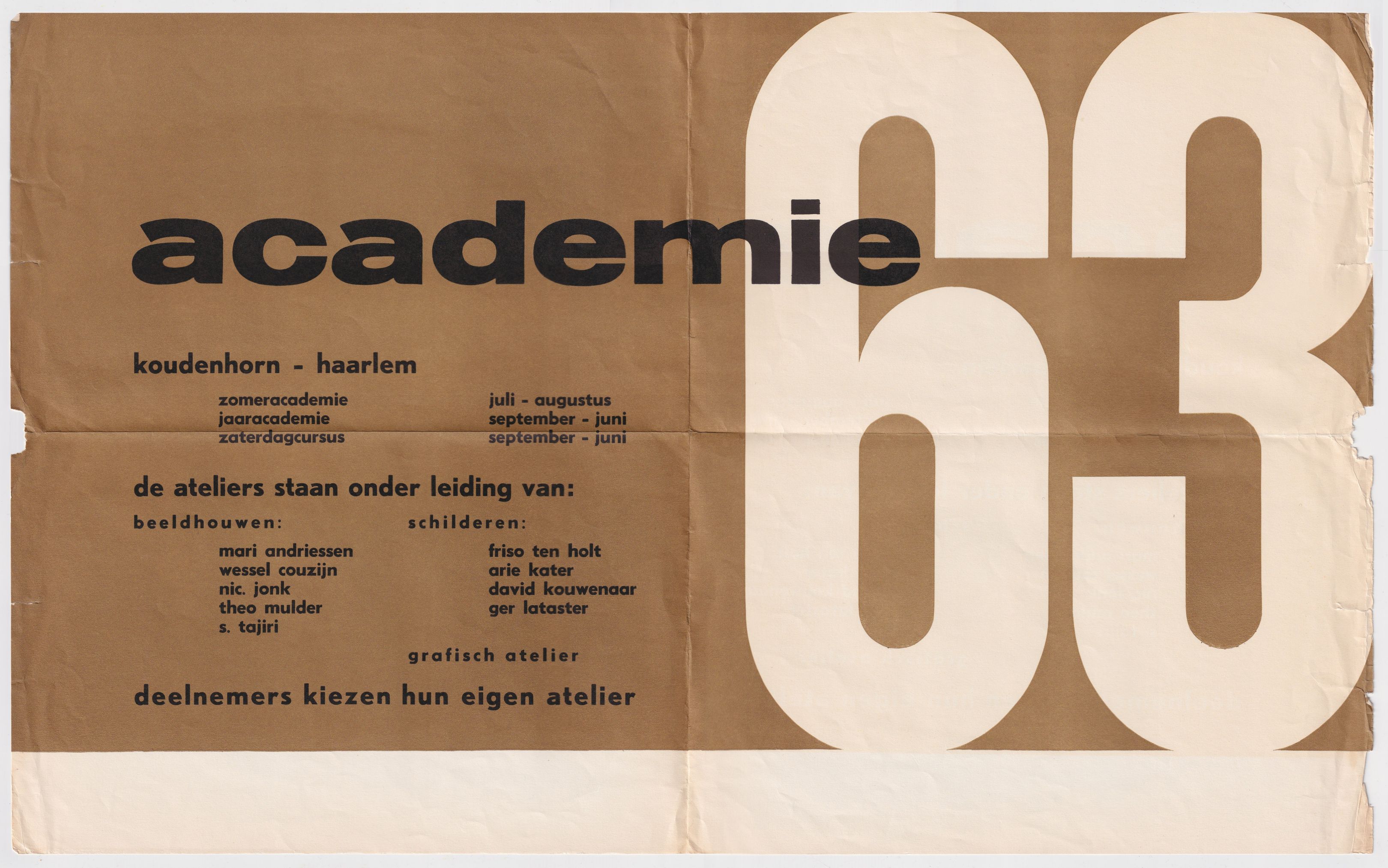
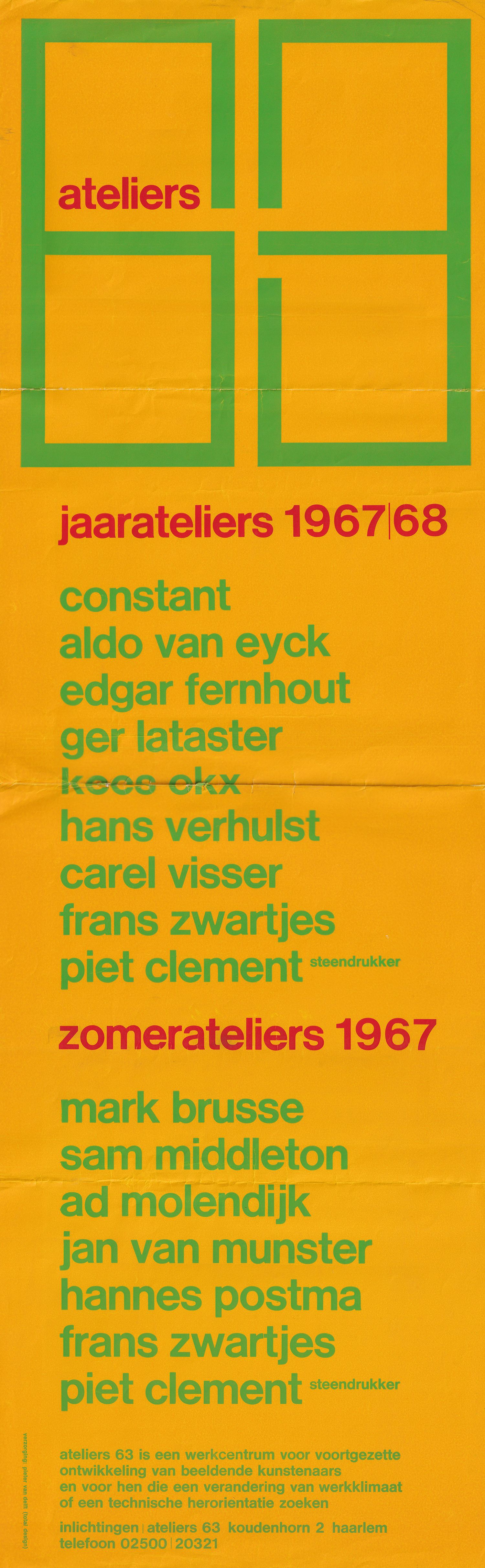
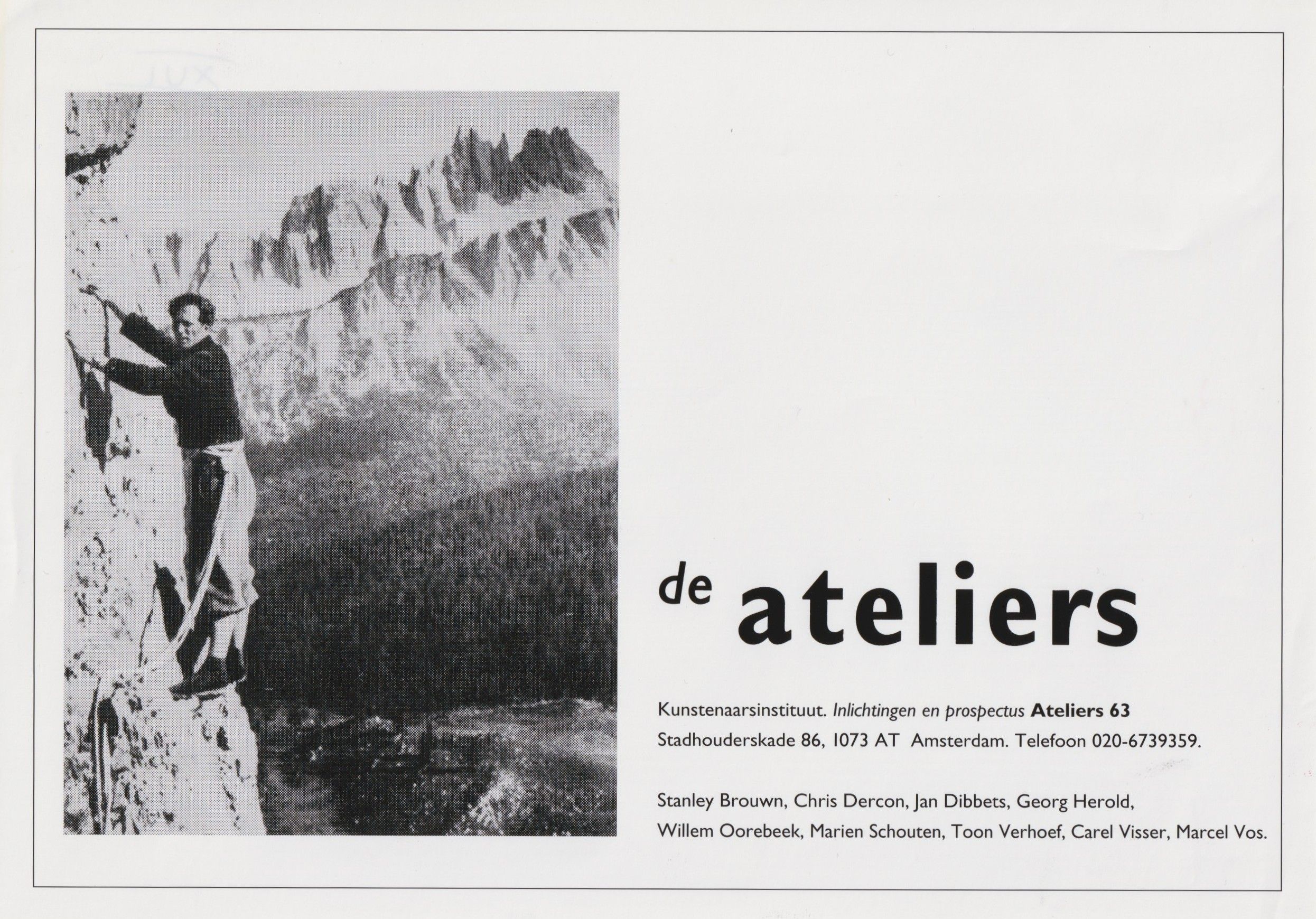
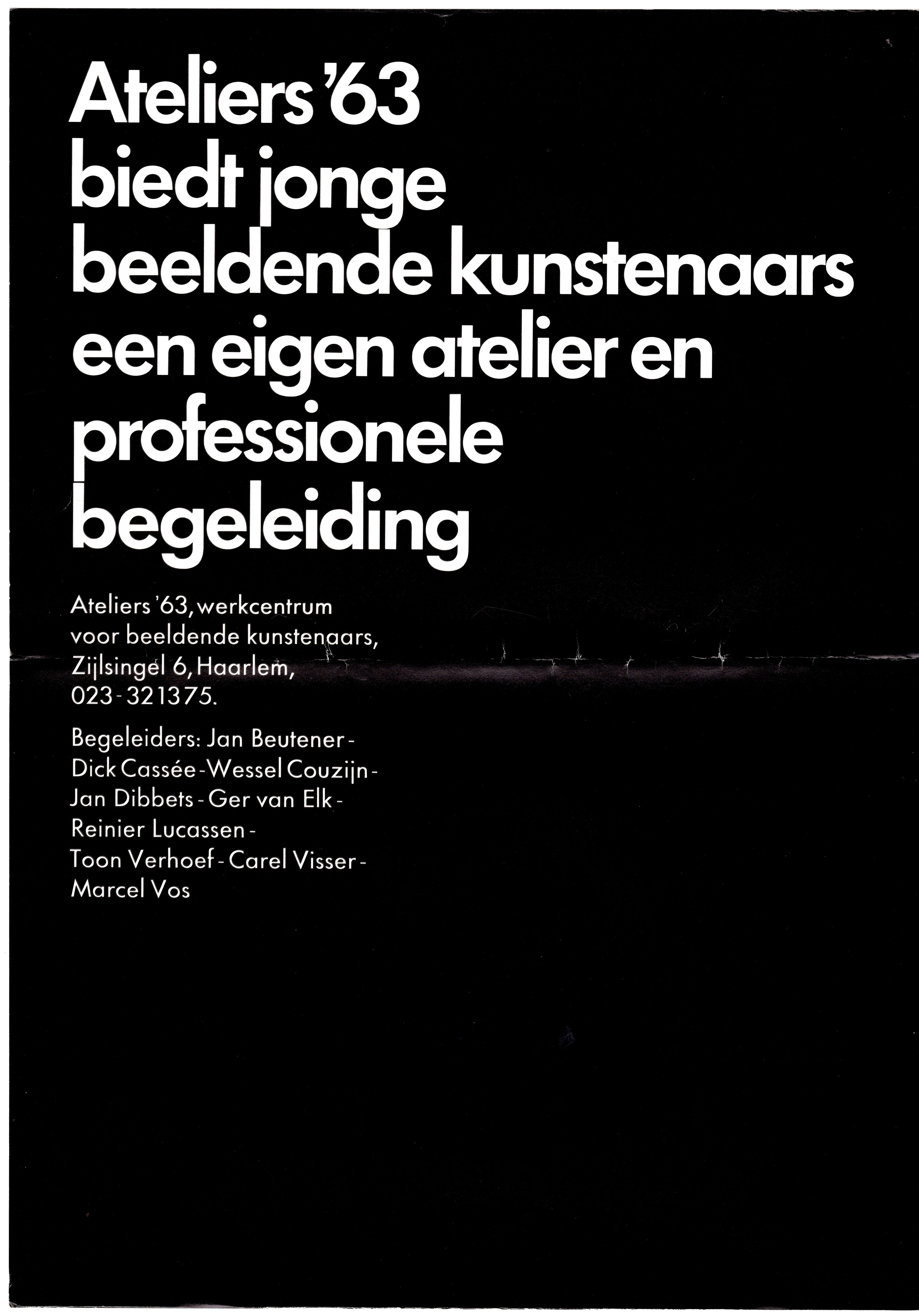
poster opening exhibition ateliers '63